At almost every show, some kid asks a question that stops the room: "Why are bubbles always round?" It's a great question, and the answer is real physics. Here's the science behind bubbles, explained so you can share it with your kids (or your class).
What a bubble is made of
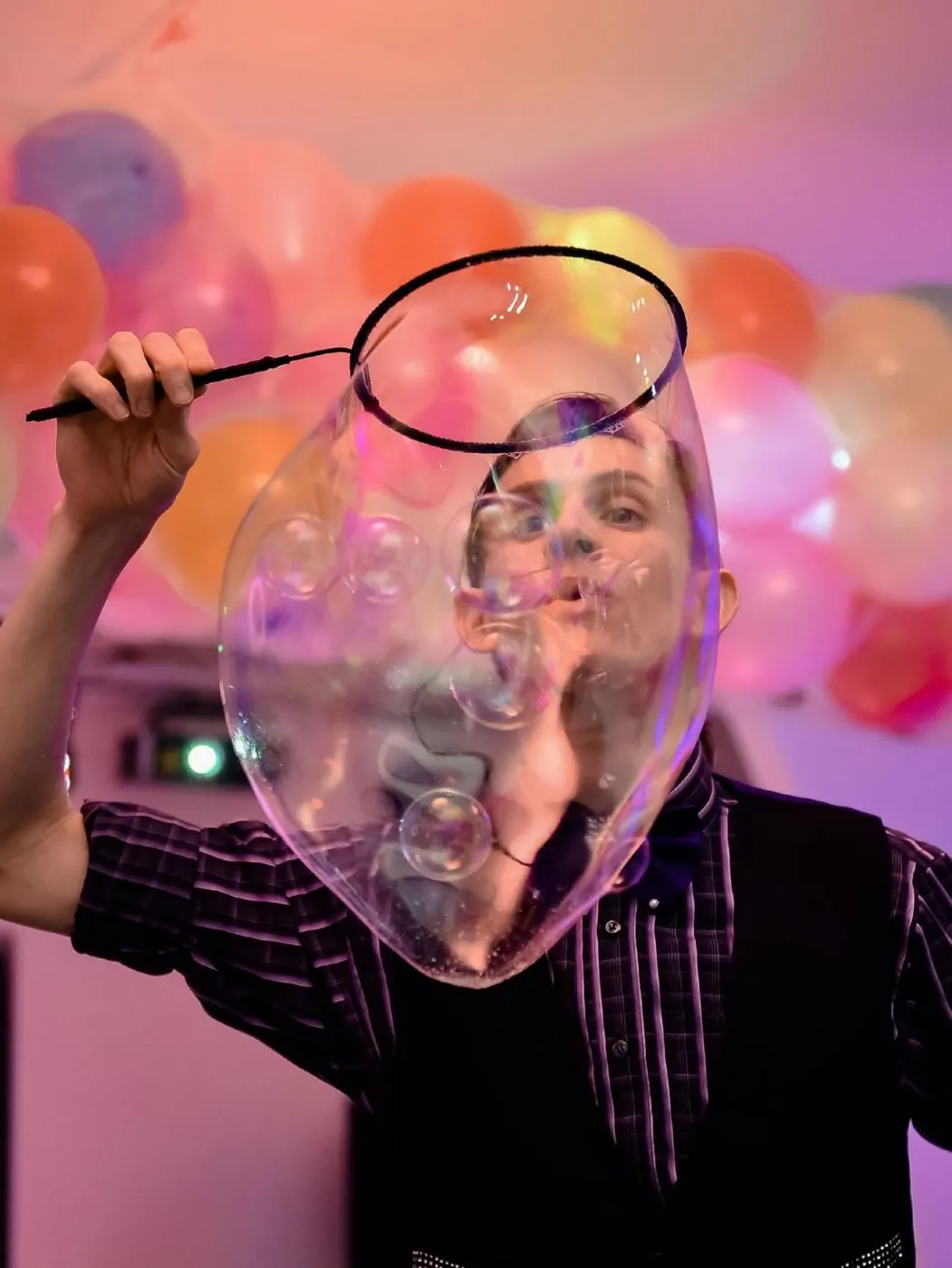
A bubble is a tiny bit of air wrapped in a very thin skin. That skin is a sandwich: a layer of water in the middle, with a layer of soap on each side. The whole film is thinner than a strand of hair, often much thinner.
Plain water can't make a bubble on its own. Water molecules pull on each other so strongly (scientists call this surface tension) that a water film snaps almost instantly. Soap lowers that pull just enough, and spreads it evenly, so the film can stretch without breaking. That's why bubble solution is mostly water with soap mixed in.
So why are bubbles round?
The soap film is always trying to shrink. Surface tension pulls it as tight as it can go, like a stretched balloon trying to get smaller. But the air trapped inside pushes back.
The shape that holds a certain amount of air with the least possible skin is a sphere. So the film pulls itself into a ball, every time. It doesn't matter what shape the wand is. Blow through a square wand or a star-shaped wand, and the bubble still comes out round once it floats free.
Try it at home: bend a pipe cleaner into a square or a heart, dip it in bubble solution and blow gently. Ask your kids to guess the bubble's shape before you blow.
Why are bubbles rainbow-colored?
Bubbles aren't colored at all. The film is clear. The colors come from light.
When light hits a bubble, some of it bounces off the outside of the film and some bounces off the inside. Those two reflections travel slightly different distances and then meet again. Depending on how thick the film is at that spot, some colors line up and get brighter while others cancel out. This is called thin-film interference, the same effect you see in a puddle with a little oil on it.
Because the film is always moving and changing thickness, the colors swirl and shift. Watch closely and you'll see them drift and change.
Why do bubbles pop?
A few things end a bubble's life:
- Gravity. Water slowly drains down to the bottom of the bubble, so the top gets thinner and thinner.
- Evaporation. The water in the film dries out, especially in hot, dry air.
- Touch. Dry fingers, dust or a blade of grass break the film.
Here's a secret: just before a bubble pops, the colors at the top often disappear and the film looks dark or clear. That means it's become so thin that it can't reflect color anymore. Pop is coming.
That's also why bubbles last longer on cool, humid days and why bubble performers love calm air. Wet hands are another trick: a wet finger can go right through a bubble without popping it.
What about smoke-filled bubbles?
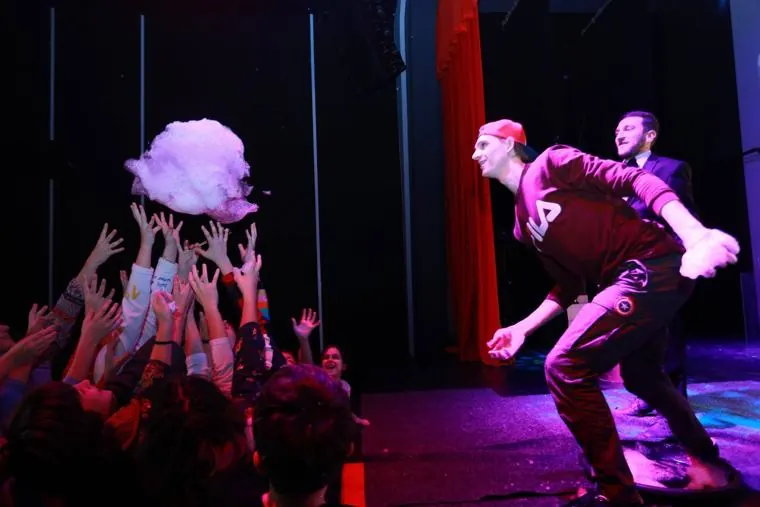
Smoke bubbles are regular bubbles filled with a harmless fog instead of plain air. Two things make them special. You can see the inside, so they look white and cloudy. And fog-filled bubbles are heavier than air-filled ones, so instead of floating up, they sink slowly toward the floor. When one pops, the fog spills out in a little puff, which is why kids go wild for them.
Why giant bubbles need special solution
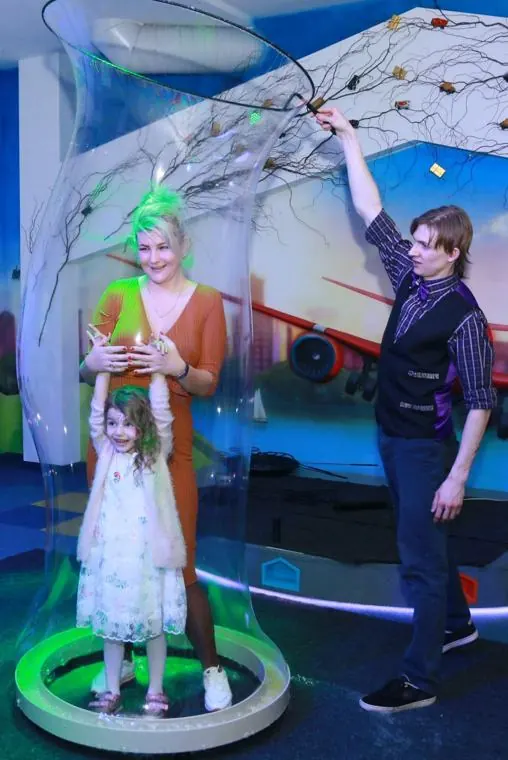
A small bubble needs only soap and water. A bubble big enough to stand inside needs a stronger, stretchier film that dries out more slowly. Performers use specially mixed solutions with ingredients that make the film thicker and more elastic. Every bubble artist has their own recipe, and getting it right takes years of practice.
Questions to ask your kids after the show
- If you blow a bubble through a square wand, what shape will it be? Why?
- Where do the colors in a bubble come from?
- Why did the smoke bubbles fall down instead of floating up?
- What could you do to make a bubble last longer?
Teachers: this is exactly the kind of science we bring to schools. Surface tension, light and air pressure, all explained with bubbles big enough to stand in.